Stream your DAW audio to Zoom (Windows PC)
Apr 02, 2021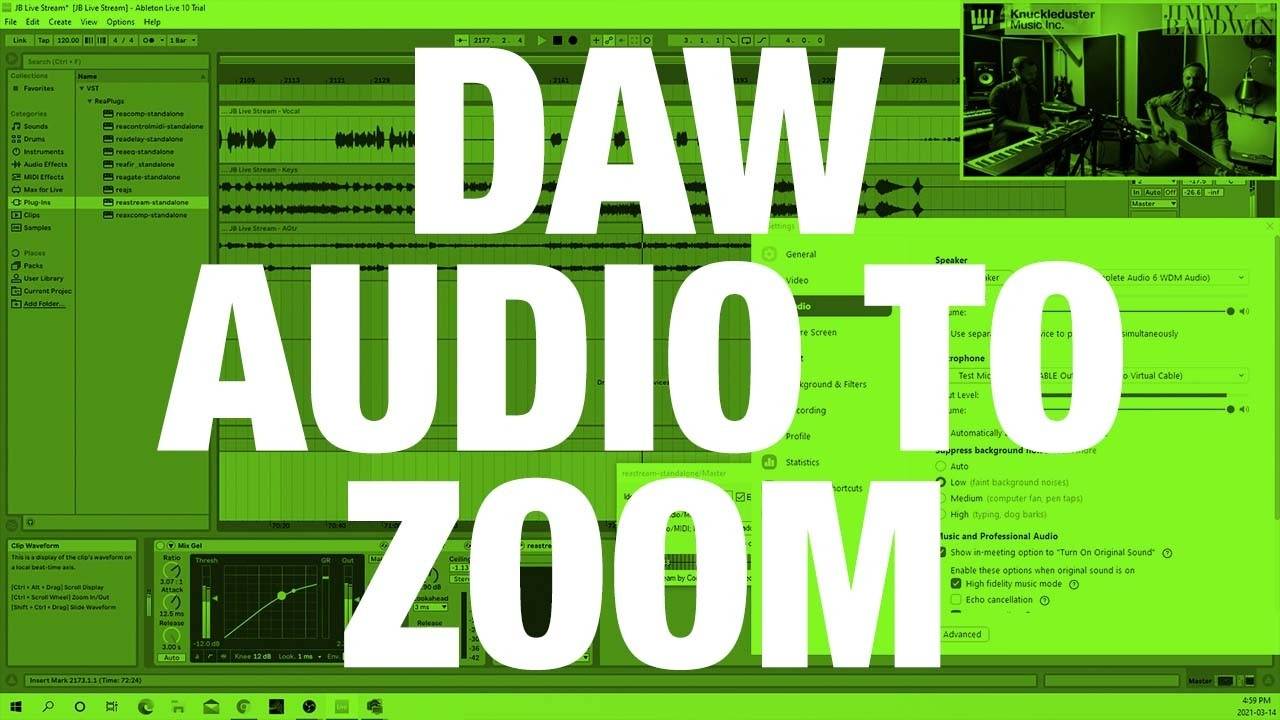
Why Route Your DAW Audio Into Zoom
Zoom's built in microphone handling is not built for music. If you are using Zoom to run a livestream, teach a lesson, or perform with other musicians, you are normally stuck with whatever raw signal your microphone is sending, with no reverb, no EQ, and no compression available to shape it. That is a real problem if you want your voice or your instrument to sound professional on the call.
The fix is to route your audio through your DAW first, the same way you would for a stream in OBS. Once your signal is passing through Logic Pro, Ableton Live, or any DAW that supports third party plugins, you have every tool already sitting in your session available to you before that audio ever reaches Zoom. On a PC, getting there takes two free tools working together: the ReStream plugin to get audio out of your DAW and into OBS, and a free virtual audio driver called VB-Cable to carry that signal the rest of the way from OBS into Zoom.
If you have not already set up ReStream and OBS to receive audio from your DAW, start with that first. This video builds directly on that setup, so getting ReStream working is a prerequisite before adding Zoom into the chain.
What You Will Need
You will need the free ReaPlugs bundle, which includes the ReStream plugin used to send audio out of your DAW and into OBS, and the free VB-Cable virtual audio driver, which is what carries that signal from OBS over to Zoom. Both are free downloads, and once they are installed, the rest of the setup is just a matter of routing.
Download and install VB-Cable, and make sure you run the installer as an administrator. Right click the setup file and choose Run As Administrator, since VB-Cable needs that permission level to install its virtual audio device correctly on a PC.
Setting Up OBS To Send Audio Out Through VB-Cable
If you already have your DAW sending audio into OBS through ReStream, you should already have an audio input capture source set up in OBS for your DAW signal. Click the settings wheel on that source and go to Advanced Audio Properties. Under Audio Monitoring, set this source to Monitor and Output.
Next, open your main OBS Settings and go to the Audio tab. Under Monitoring Device, set this to Cable Input, which is the virtual driver you just installed. Here is what is actually happening with this routing: your DAW audio input capture source is set to Monitor, which means OBS is sending that signal out through your monitoring device. Since your monitoring device is now set to Cable Input, OBS is effectively broadcasting your DAW's audio into one end of the VB-Cable virtual connection.
Setting Up Zoom To Receive The Audio
Open Zoom's audio settings. Your speaker should be set to whatever you normally use to listen back, such as your audio interface. For the microphone, select Cable Output. This is the other end of the same virtual cable, so Zoom is now picking up the exact signal OBS just sent out, which started as your processed DAW audio.
A few other settings in Zoom are worth adjusting while you are in there for the best possible audio quality. Set Suppress Background Noise to Low, since Zoom's aggressive noise suppression can interfere with music and processed audio. Then check the box to turn on Original Sound, and within that, check High Fidelity Music Mode and Stereo Audio as well. Leave Echo Cancellation unchecked only if you are listening back through headphones. If you are using speakers instead of headphones, keep echo cancellation on, or you will run into feedback and delay.
Once Original Sound is enabled in your settings, you will see a button appear in the top corner of the Zoom window during a call. Make sure that is turned on, since it is what actually activates the higher quality audio path you just configured.
Testing The Connection
With everything set up, go back to your DAW and press play. You should see audio levels moving on your microphone input inside Zoom, confirming the full chain is working: your DAW sends audio to OBS through ReStream, and OBS sends that same audio to Zoom through the VB-Cable virtual driver.
If you are not seeing any signal in Zoom, double check that your OBS monitoring device is set to Cable Input, and that Zoom's microphone is set to Cable Output. Both ends of that virtual cable need to match for the signal to pass through correctly.
Why This Setup Is Worth Setting Up Once
Once this routing is in place, your voice or instrument going into Zoom is no longer raw, unprocessed signal fighting against Zoom's default noise suppression. Every plugin already living in your DAW session, reverb, EQ, compression, and anything else, is shaping your sound before it ever reaches the call. For teaching lessons, performing with other musicians remotely, or running a livestream through Zoom, this gives you a genuine mixing environment behind the scenes instead of settling for whatever your microphone and Zoom's defaults produce on their own.
It takes a few minutes to get both pieces, ReStream and VB-Cable, installed and routed correctly the first time, but once that is done you can reuse the exact same setup for every future session.
If you liked the music in this video make sure to check out the great Jimmy Baldwin.